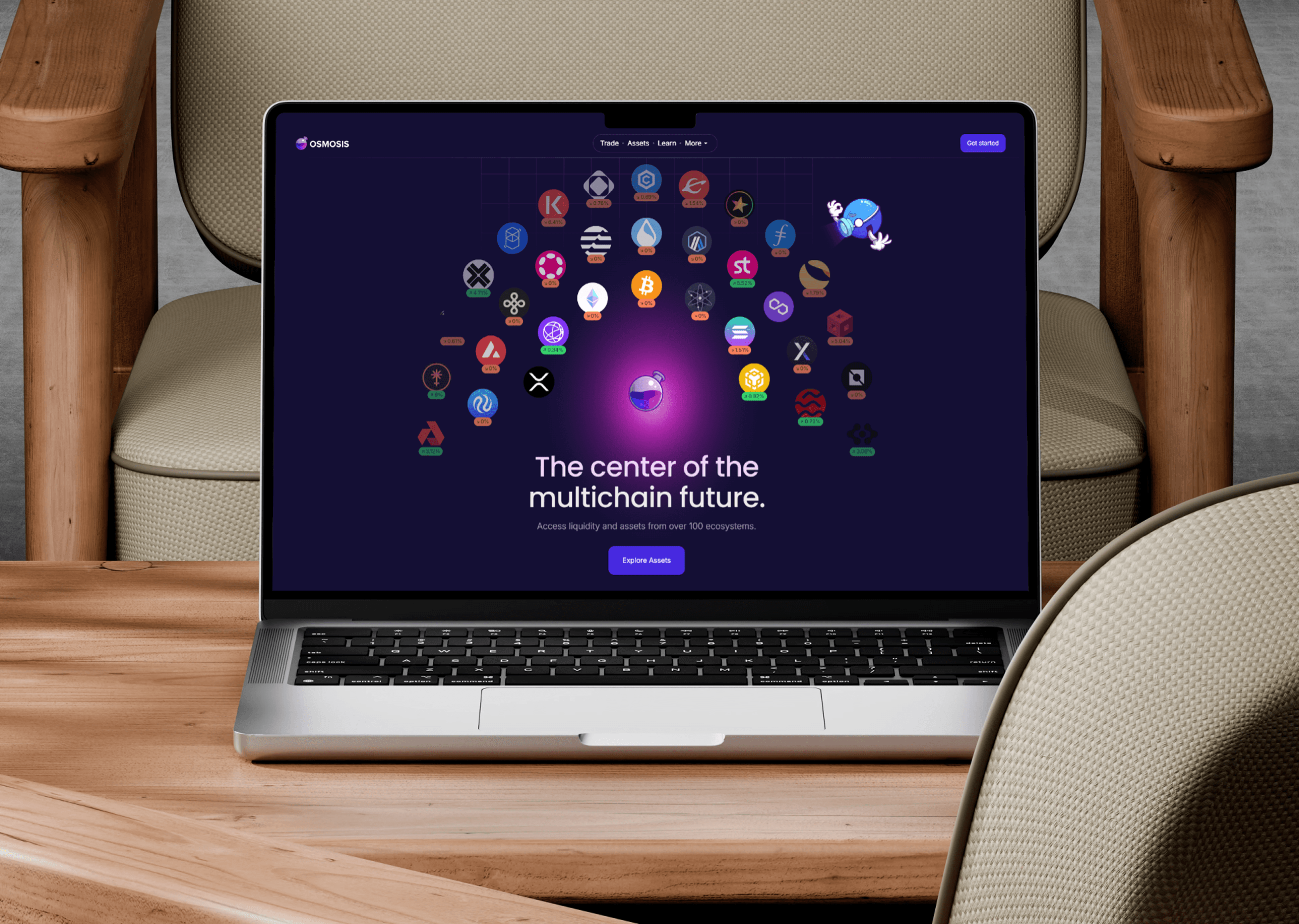
Osmosis
The liquidity hub of the interchain
Osmosis powers trading across the interchain.
Osmosis is the primary decentralized exchange in the Cosmos ecosystem. Built as its own blockchain, it connects assets from multiple networks and acts as the liquidity hub of the interchain.
The platform allows users to trade assets, provide liquidity, and move capital across ecosystems without relying on centralized exchanges.
Designing for this environment means building tools that support complex financial interactions while still feeling clear and responsive for traders.
DeFi trading is powerful, but the experience is often fragmented.
Many decentralized exchanges expose raw protocol mechanics directly to users. The result is an interface that feels technical, slow, and difficult to navigate — especially when markets move quickly. Through extensive user interviews and research, several consistent problems appeared:
- •Trading flows required too many steps
- •Market data was difficult to scan quickly
- •Interfaces exposed complexity without structure
- •Experienced traders wanted faster execution
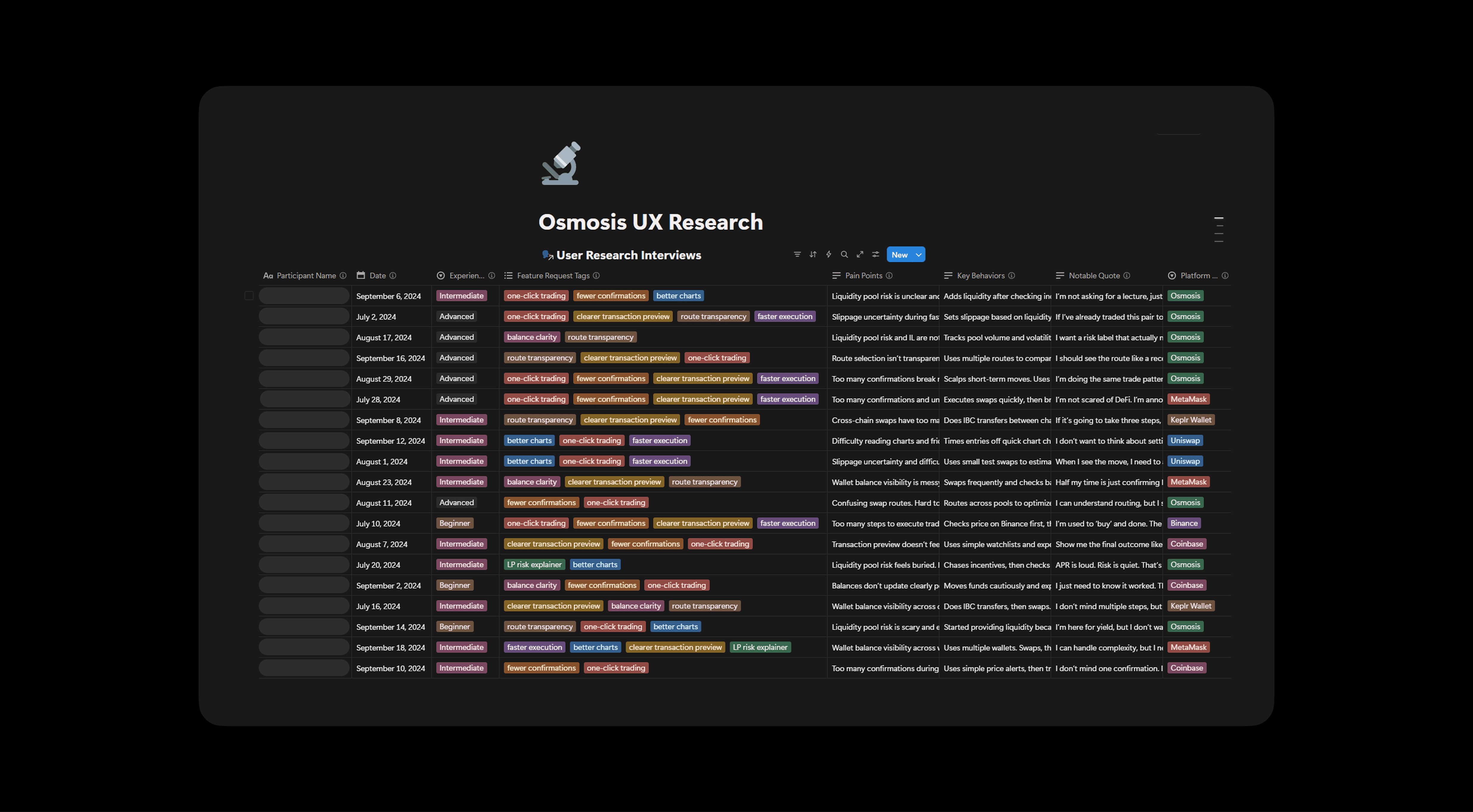
Understanding how traders actually use the product.
User interviews were conducted across multiple trader profiles:
- •Experienced DeFi traders
- •Liquidity providers
- •Cross-chain users within the Cosmos ecosystem
- •Traders migrating from centralized exchanges
Research findings were organized in Airtable and Notion to track patterns across interviews and product feedback.
This research shaped several core product decisions:
- •Simplifying trade execution
- •Improving market signal visibility
- •Reducing friction in trading flows
- •Designing faster interaction paths for experienced users
Redesigning the trade screen.
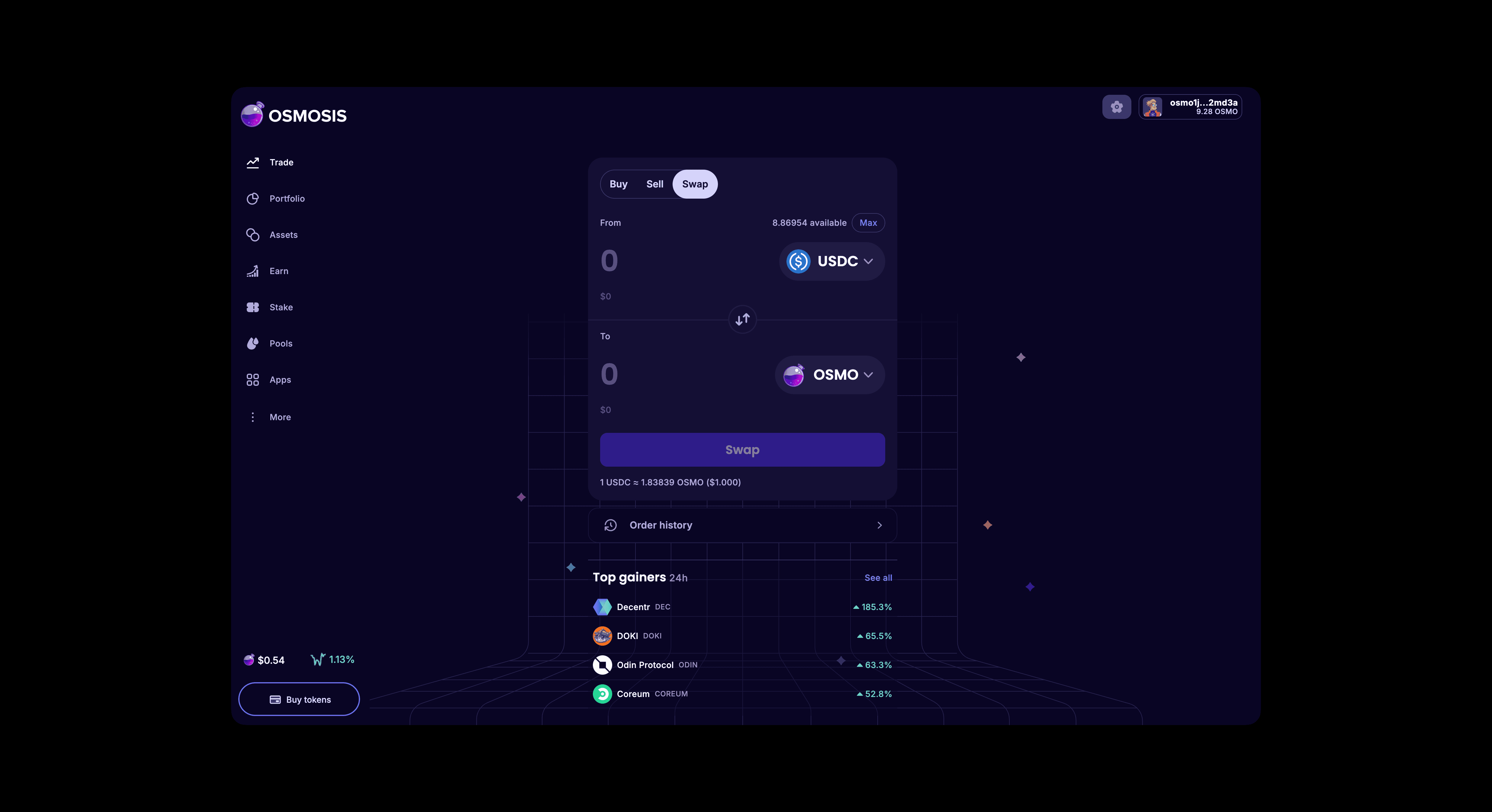
The trade interface is the most critical surface in Osmosis. It’s where traders analyze assets, evaluate price movement, and execute swaps. The trade screen was redesigned to make this workflow faster and easier to read under pressure. The interface combines:
- •Token price analytics
- •Real-time chart data
- •Route discovery for swaps
- •Wallet balance awareness
- •Transaction previews before execution
The goal was simple: give traders the information they need without slowing them down.
Reducing friction for experienced traders.
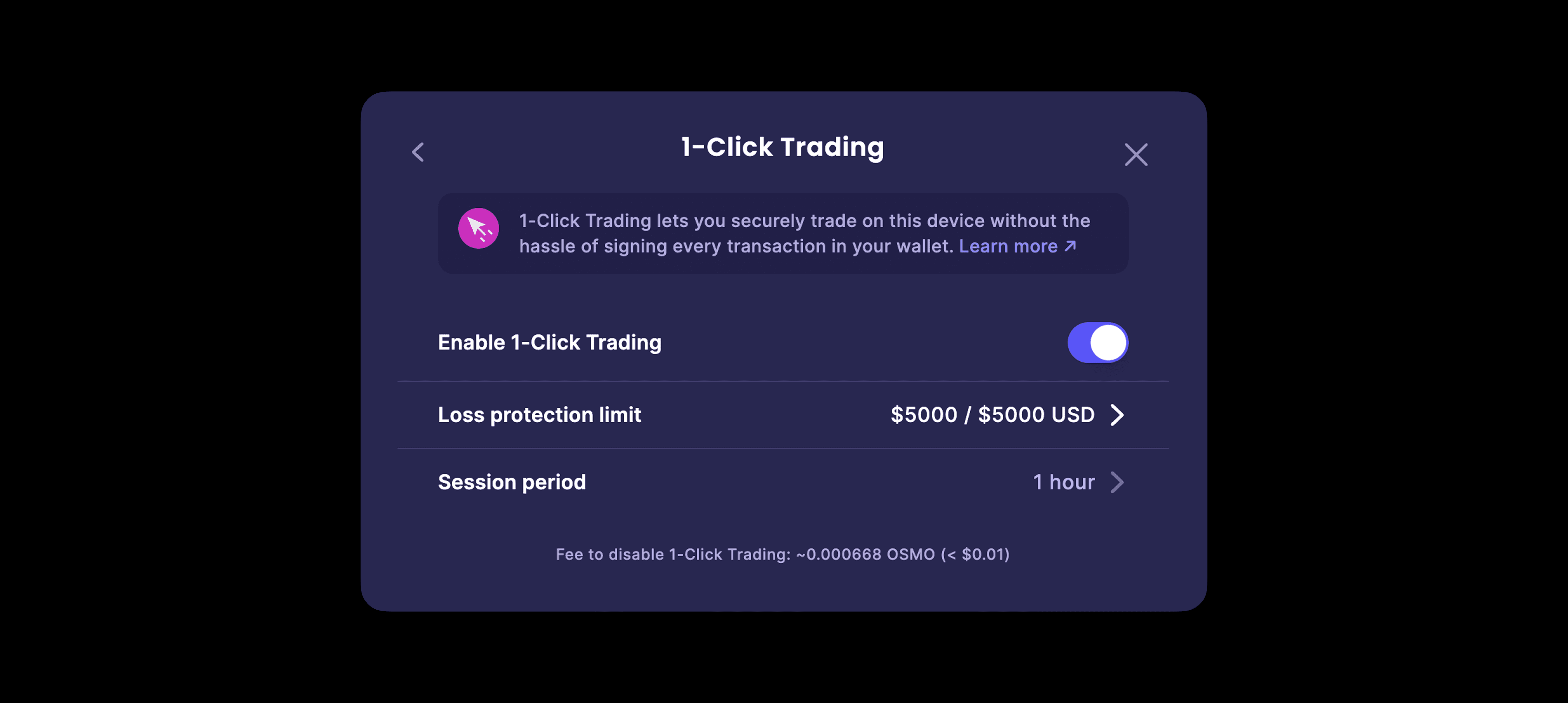
Many experienced users execute trades quickly and repeatedly. Traditional DeFi flows often require multiple confirmations and interaction steps that slow this process down. One-click trading streamlined the interaction. Instead of moving through multiple screens, traders could execute swaps directly from the interface while still seeing key transaction information. This reduced friction while maintaining transparency around what the system was doing.
Designing charts and market signals for faster decision making.
Crypto traders rely heavily on visual signals. Charts and market indicators help users evaluate opportunities quickly. Charts and market data were designed to surface the most important signals without overwhelming the interface. These visualizations support:
- •Price movement analysis
- •Trading activity signals
- •Asset performance trends
- •Faster scanning during market volatility
Clear visual hierarchy makes market behavior easier to interpret at a glance.
Making liquidity participation easier to understand.
Liquidity pools are fundamental to how Osmosis functions. They power trading and allow users to earn fees by supplying assets. Designing for liquidity required translating complex financial mechanics into an interface that felt approachable. The goal was to help users understand:
- •How pools are structured
- •How liquidity positions behave over time
- •How trading activity impacts pool performance
Improving how traders interact with the interchain.
Osmosis has become one of the most important infrastructure platforms within the Cosmos ecosystem. Design improvements across trading, liquidity, and market visualization helped make the product easier to navigate while supporting a high-volume trading environment. The platform continues to evolve as the interchain ecosystem grows.
Designing for crypto is designing for complexity.
One thing that became clear quickly was how many edge cases exist in crypto trading. Different assets behave differently. Networks behave differently. Transactions can fail, route differently, or return unexpected results. Designing this system meant accounting for dozens of states across every interaction. The challenge wasn’t simplifying the underlying system — it was building an interface that could handle that complexity without overwhelming the user.
NEXT PROJECT